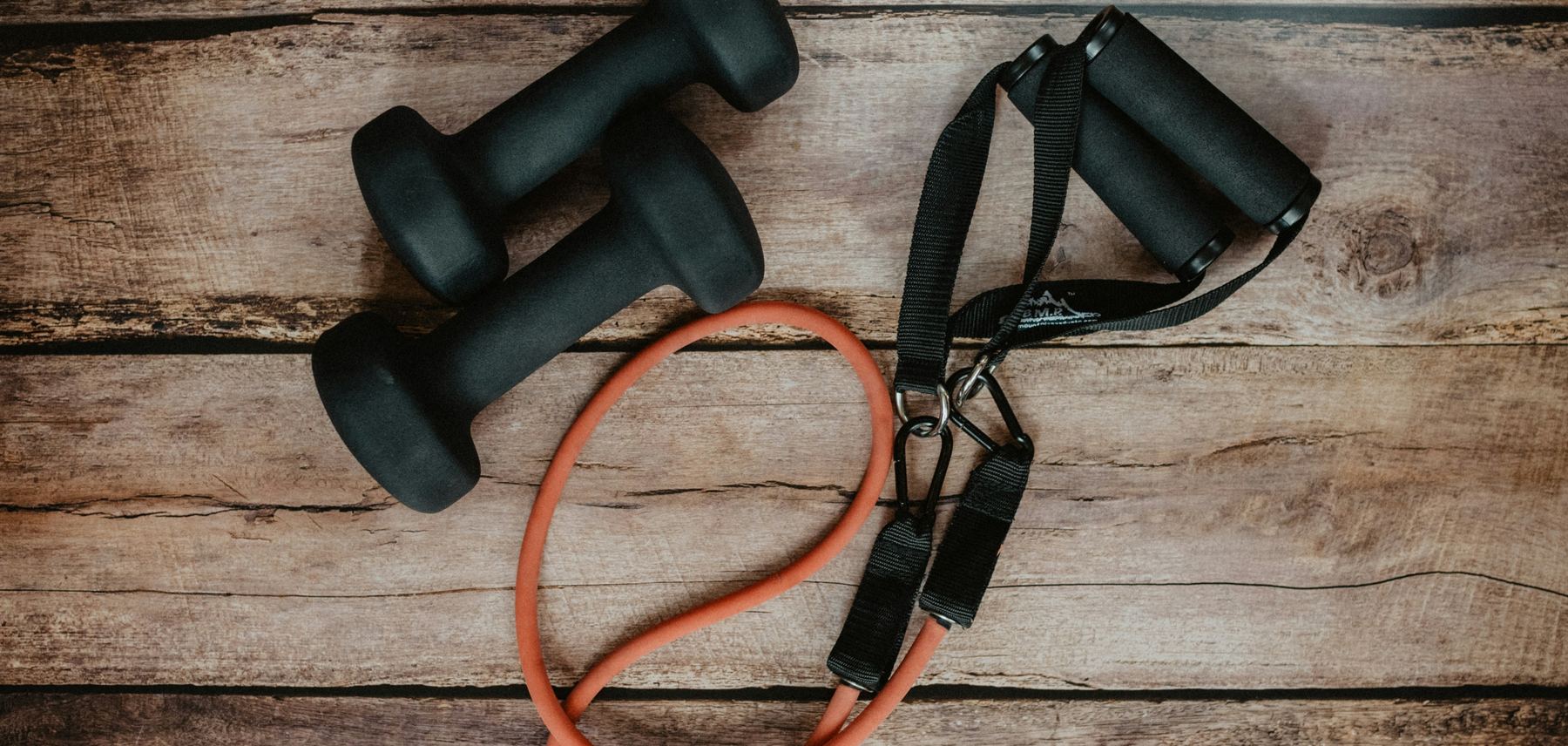
Different types of training offer different benefits, from stronger muscles and bones to a healthier heart and better balance, so it may help to think of them as building blocks. None of them need to be complicated, and all movement counts.
The foundations
Strength training: 2 to 3 sessions a week
If you focus on one type of movement, make it this one. Muscle is your body's largest site for clearing sugar from the blood. It protects you against falls, frailty, osteoporosis and metabolic disease. Without training, muscle mass begins to decline in your 30s and speeds up with age, and strength declines even faster.
Sessions of 30 to 45 minutes are plenty. Compound lifts work several joints and muscles at once, and it can be simpler than most people think:
- Five movement patterns: squat, hinge, push, pull and carry.
- A couple of sets of 8 to 12 repetitions each.
- A weight heavy enough that the last two repetitions feel hard.
For bone health, especially around and after menopause, heavier lifting and some impact, like jumping or skipping, matter most. In one trial of postmenopausal women with low bone density, supervised heavy lifting and jumping twice a week improved bone density at the spine and hip. It's best to work up to this gradually, ideally with guidance.
Cardio: about 150 minutes a week
Zone 2 is a good target: walking or cardio at a moderate pace, about 60–70% of your maximum heart rate. You're working, but you can still hold a conversation. Research suggests it improves mitochondrial function and your body's ability to burn fat. Regular moderate activity also lowers blood pressure and heart disease risk. That's about 20 minutes a day, and short bouts count. Vigorous activity, like running or a spin class, counts roughly double.
It doesn't all need to be dedicated cardio time. Walking around the city running errands counts. Steps are a simple way to track your activity. In an analysis of about 47,000 adults, the benefit for longevity leveled off at around 6,000 to 8,000 steps a day for adults over 60, and 8,000 to 10,000 for younger adults.
Try exercise snacks
If finding time is difficult, start smaller: 1 to 2 minutes, a few times a day.
Newer research suggests that short bursts of activity spread through the day may be better than one longer session for blood sugar and blood pressure. Do squats at your desk, take the stairs or carry the heavy groceries.
Training for real life
These elements keep us independent and capable well into later life.
Balance: 5 minutes a day
Balance starts declining in your 40s, and we often don't notice until the first fall or fracture. In one study, people who couldn't stand on one leg for 10 seconds had nearly twice the risk of death, even after accounting for other health and fitness measures.
It's easy to train if you're intentional about it. Stand on one leg while you brush your teeth, or walk heel to toe into your kitchen each morning.
Power: a few fast reps in each session
Power, the ability to move quickly, declines even faster than strength as we age. This is partly because fast-twitch muscle fibers are the first to be lost. Power is closely tied to falls and everyday function. To build it, lift the weight quickly and lower it slowly, practice standing up quickly from a chair, or add in brisk step-ups.
Mobility and grip: 5 minutes
How well you control your joints under load protects you from injury and decline. Try hip hinges, upper-back rotations and ankle mobility work. You may have seen the floor-rise test on social media: being able to sit down on and get up from the floor without support is associated with lower mortality.
Grip strength is easy to track and is a strong predictor of longevity, linked to heart disease risk and overall mortality. Farmer's carries, where you walk while holding something heavy in each hand, and dead hangs from a bar are great ways to build it.
High intensity: a few minutes, once a week
If you can, add one short burst of hard effort a week. It could be three hard minutes during your workout, a few hill sprints, or a quick sprint up the stairs at work. Higher-intensity work is one of the most effective ways to raise your VO2 max, a key measure of fitness and reserve capacity.
VO2 max matters more than most people realize. In a study of more than 120,000 adults, low cardiorespiratory fitness carried a risk of death comparable to or greater than smoking or diabetes. We lose about 10% of our VO2 max every decade we don't train, but we can slow or even reverse that, well into our 70s.
Where to start
Pick one building block that's missing from your week. That could be daily desk squats, a 10-minute walk after lunch, or standing on one leg while you brush your teeth. Give it two weeks, then build from there. The Longevity 101 check-in may help if you're not sure where to begin.
References
- Westcott WL. Resistance training is medicine: effects of strength training on health. Current Sports Medicine Reports. 2012.
- Watson SL, et al. High-intensity resistance and impact training improves bone mineral density and physical function in postmenopausal women with osteopenia and osteoporosis: the LIFTMOR randomized controlled trial. Journal of Bone and Mineral Research. 2018.
- San-Millán I, Brooks GA. Assessment of metabolic flexibility by means of measuring blood lactate, fat, and carbohydrate oxidation responses to exercise in professional endurance athletes and less-fit individuals. Sports Medicine. 2018.
- Sattelmair J, et al. Dose response between physical activity and risk of coronary heart disease: a meta-analysis. Circulation. 2011.
- Cornelissen VA, Smart NA. Exercise training for blood pressure: a systematic review and meta-analysis. Journal of the American Heart Association. 2013.
- U.S. Department of Health and Human Services. Physical Activity Guidelines for Americans, 2nd edition. 2018.
- Paluch AE, et al. Daily steps and all-cause mortality: a meta-analysis of 15 international cohorts. Lancet Public Health. 2022.
- Stamatakis E, et al. Association of wearable device-measured vigorous intermittent lifestyle physical activity with mortality. Nature Medicine. 2022.
- Araujo CG, et al. Successful 10-second one-legged stance performance predicts survival in middle-aged and older individuals. British Journal of Sports Medicine. 2022.
- Reid KF, Fielding RA. Skeletal muscle power: a critical determinant of physical functioning in older adults. Exercise and Sport Sciences Reviews. 2012.
- Brito LBB, et al. Ability to sit and rise from the floor as a predictor of all-cause mortality. European Journal of Preventive Cardiology. 2014.
- Leong DP, et al. Prognostic value of grip strength: findings from the Prospective Urban Rural Epidemiology (PURE) study. Lancet. 2015.
- Mandsager K, et al. Association of cardiorespiratory fitness with long-term mortality among adults undergoing exercise treadmill testing. JAMA Network Open. 2018.
This article is for general education and isn't a substitute for personal medical advice. Please talk with your own clinician before changing your medications, supplements, diet or exercise routine.